Products Details
| Position | Garden, Commercial, Exterior, Interior |
| Application | Apartment, Hospital, Villa, Hotel, Office Building, Exterior, House, Garden |
| Type | Sliding window |
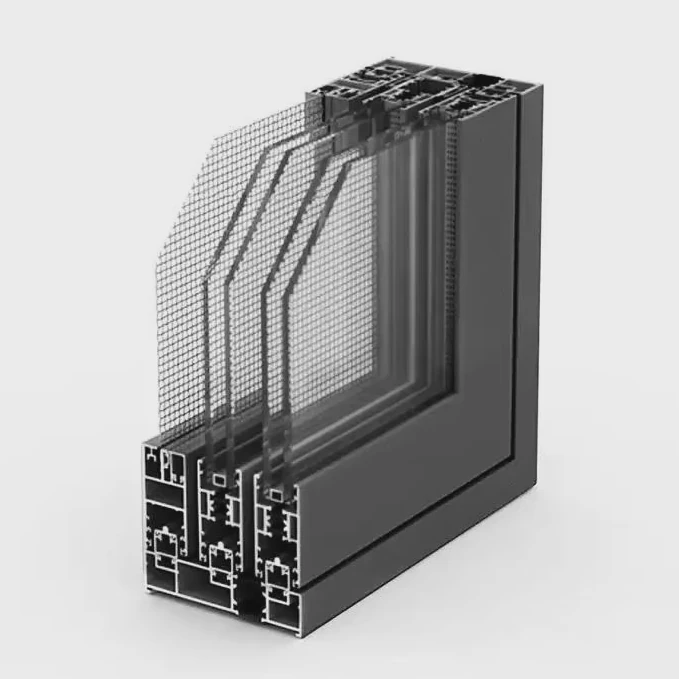
| Feature | Magnetic Screen, Folding Screen |
| Glass Type | double glazing tempered glass, single glass |
| Surface Finishing | Finished |
| Design Style | Modern |
| Screen Netting Material | Nylon |
| After-sale Service | Online Technical Support |
| Project Solution Capability | total solution for projects |
| Main Material | Aluminum |
| Open Style | Sliding |
| Product name | Aluminium Sliding Door Double Glazed Thermal Break |
| Color | Customized Colors |
| Size | Customized Size Acceptable |
| Surface treatment | Powder Coated Smooth Finished |
| Design | OEM Customized |
| Sliding Door Type | Heavy Duty Sliding Door |
| Profile Thickness | 2.0mm |
| Frame Material | Alumium Alloy |
| Glass Type | Single\double\tempering\floating\stained\low-e |
| Type | Sliding Door System |
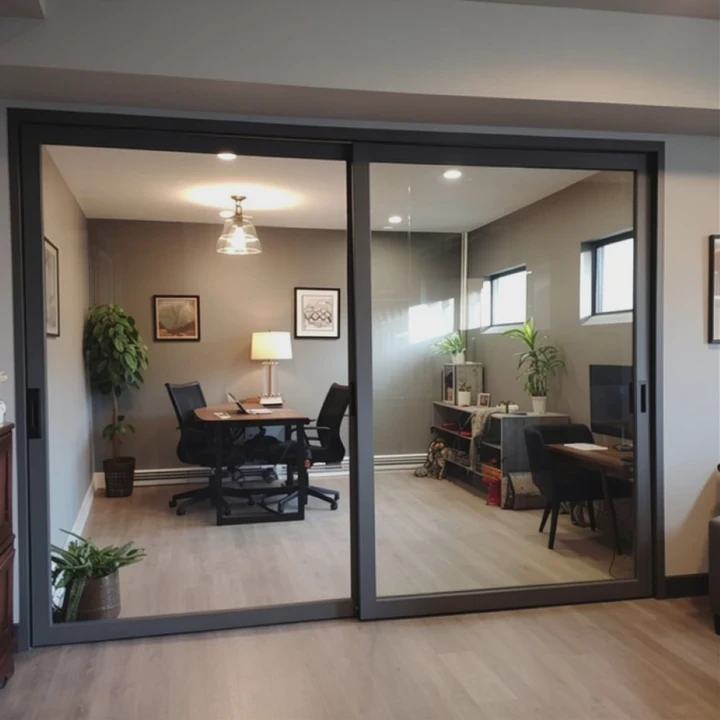
FAQ
1. What is a thermal break glass sliding door?
A thermal break glass sliding door is an insulated sliding door system with a thermal break frame that helps reduce heat transfer and improve energy efficiency.
2. Why choose a thermal break sliding door for commercial buildings?
A thermal break sliding door helps lower energy costs, improve comfort, and support modern commercial building performance.
3. Does a thermal break glass door reduce condensation?
Yes, a thermal break glass door helps reduce condensation by limiting temperature transfer between indoor and outdoor environments.
4. Is the thermal break glass sliding door suitable for offices and retail spaces?
Yes, the thermal break glass sliding door is ideal for offices, retail stores, hotels, restaurants, and other commercial spaces.
5. What glass options are available for a thermal break glass sliding door?
A thermal break glass sliding door can be customized with tempered glass, insulated glass, laminated glass, and other project-specific glass options.
6. Can a thermal break sliding glass door improve sound insulation?
Yes, a thermal break sliding glass door with insulated glass can help improve sound insulation and indoor comfort.
7. Is the thermal break frame durable?
Yes, the thermal break frame is designed for long-term durability, stable performance, and reliable daily use.
8. Can the thermal break glass sliding door be customized?
Yes, the thermal break glass sliding door can be customized in size, finish, hardware, and glass specification to match project needs.
9. Is a thermal break glass sliding door energy efficient?
Yes, a thermal break glass sliding door is energy efficient because it helps reduce thermal transfer and supports better building insulation.
10. Where is a thermal break glass sliding door commonly used?
A thermal break glass sliding door is commonly used in commercial entrances, interior partitions, hospitality projects, and energy-efficient building designs.